Classics & antiques
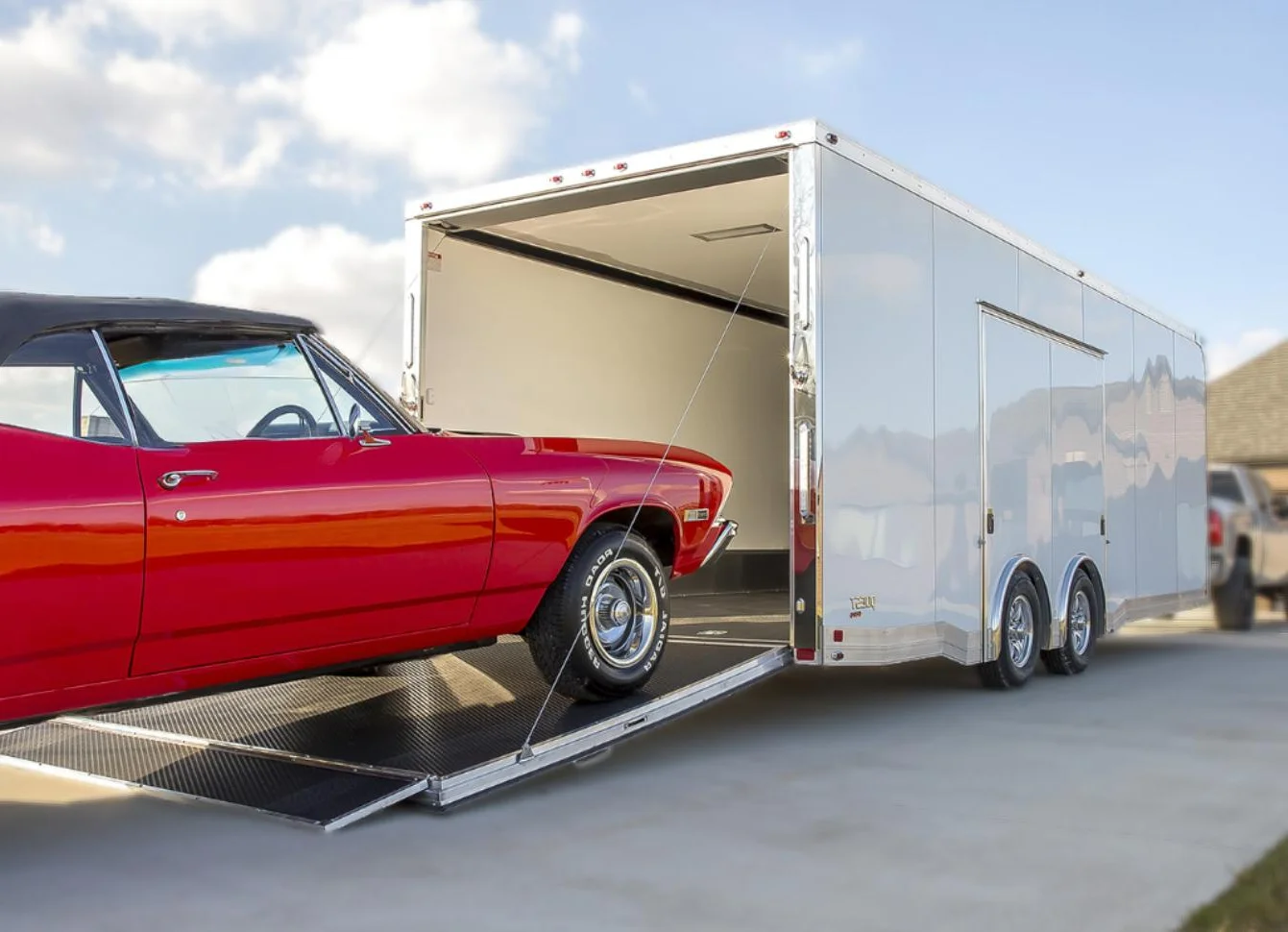
Original paint, chrome and soft tops that cannot be replaced at any parts counter. Enclosed keeps decades of preservation intact.
Enclosed Auto Transport Specialists
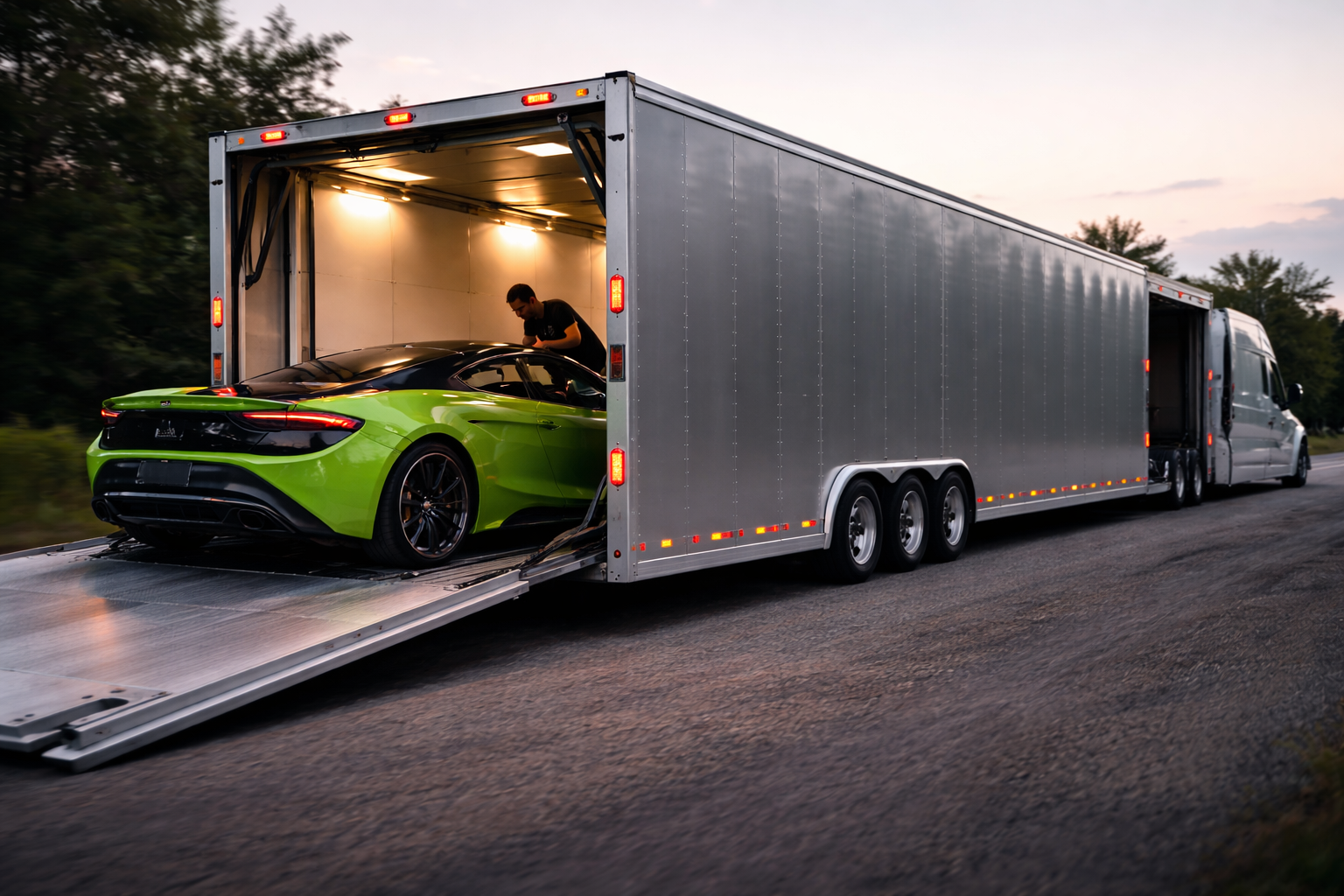
Your car travels inside a hard-sided trailer — shielded from weather, road debris and prying eyes — loaded by lift gate, secured with soft straps, and delivered door to door by carriers who move valuable cars for a living.
Tell us the route and the car. Your estimated range appears the moment your details are in — then a specialist confirms the exact figure with you personally. No obligation, and your car never shares a trailer deck with daily drivers.
About 30 seconds · Your range shows on the final step
Our network standards
Why Enclosed
On an open carrier, your car spends days exposed to everything the interstate throws at it. Enclosed transport removes the road from the equation entirely.
Rain, hail, snow, road salt and desert sun never touch the paint. The car arrives in the condition it left — not the condition the weather left it in.
Hard walls stop rocks, gravel and tire fragments cold. They also keep a rare or valuable car out of sight for the entire trip — nobody photographs it at a rest stop.
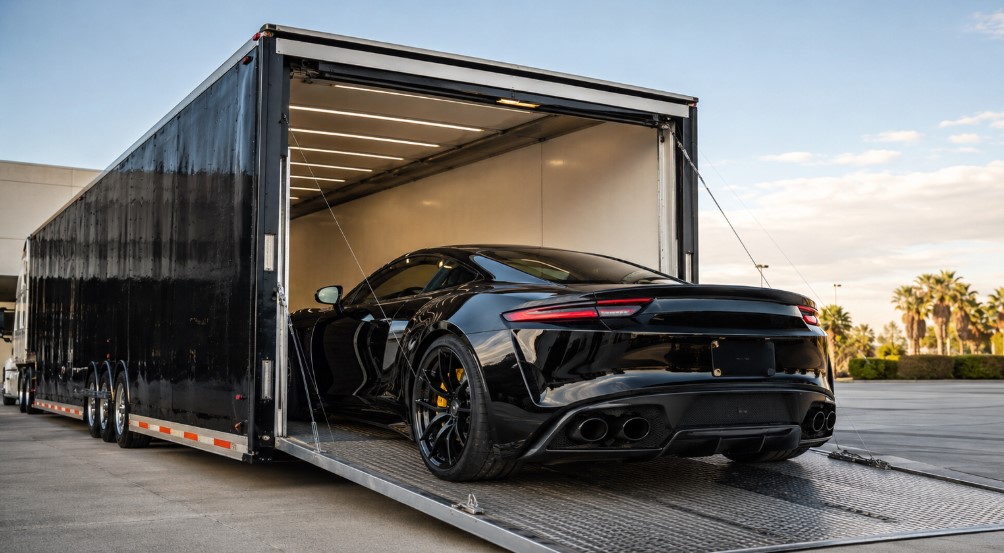
Low splitters and long noses ride up flat on a lift gate instead of scraping up steep ramps. It is the only safe way to load a car that sits inches off the ground.
Cars are secured with soft nylon straps over the tires — never chains over suspension or wheels. Enclosed carriers also carry substantially higher cargo insurance as standard for the valuable loads they haul.
The White-Glove Process
Submit the route and the car. Your range appears instantly, and a specialist confirms the exact, all-in figure with you — no surprises added later.
We match an enclosed carrier experienced with your vehicle category — lift gate for low cars, single-car attention for the rarest ones.
The driver photographs and notes the car's condition with you present, loads by lift gate or extended ramps, and straps it down with soft ties.
The trailer stays closed for the journey. At delivery, the condition inspection is repeated with you before you sign — the car should look exactly as it left.
Vehicles We Protect
Original paint, chrome and soft tops that cannot be replaced at any parts counter. Enclosed keeps decades of preservation intact.
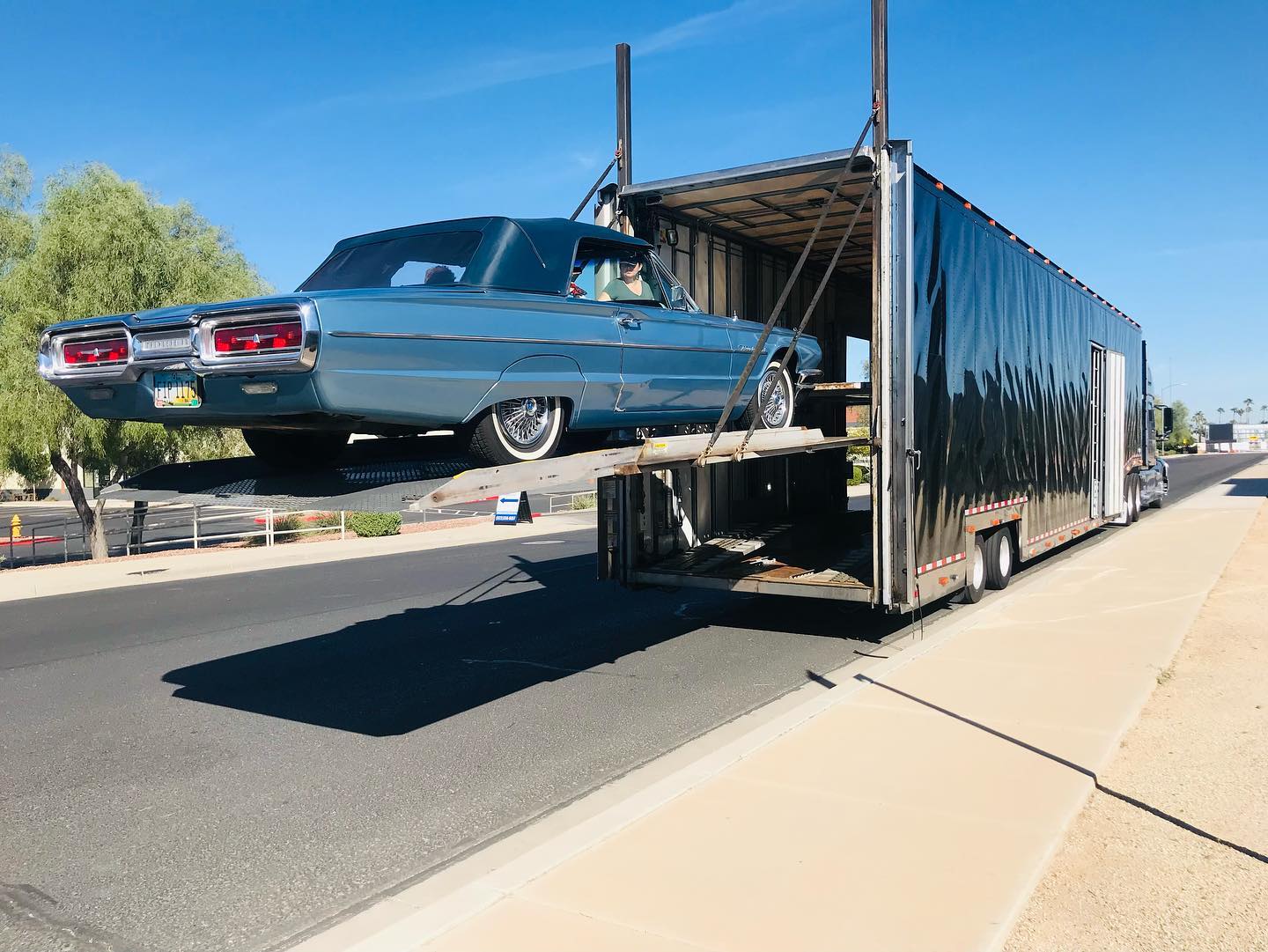
That Thunderbird never touched a ramp angle. Lift-gate loading keeps splitters, spoilers and long overhangs off the pavement.
Carbon fiber, ceramic brakes and six-figure paint jobs travel out of sight and out of the weather — the way the factory shipped them.
Bought it out of state? Skip the break-in miles, the stone chips and the detail bill. It arrives showroom-clean, exactly as inspected.
Provenance is value. Documented, sealed, insured transport protects both the car and the paperwork story that comes with it.
Winch-equipped enclosed trailers move cars that cannot be driven onto a deck — slicks, aero and all — straight to the paddock or the shop.
Enclosed vs Open
Open transport is right for plenty of everyday cars. Here is what changes when the car matters more than the savings.
| Enclosed | Open | |
|---|---|---|
| Weather protection | Complete — sealed hard-sided trailer | None — rain, snow, salt & sun |
| Road debris | Blocked — walls stop rocks & gravel | Exposed — chips are a known risk |
| Privacy | Out of sight for the whole trip | Visible to everyone, everywhere |
| Loading | Hydraulic lift gate or long ramps — built for low cars | Steep ramps — risky for low clearance |
| Securement | Soft straps over tires | Chains or straps, varies by carrier |
| Cargo insurance | Higher coverage carried as standard | Standard coverage levels |
| Best for | Classic, exotic, luxury, collector & race cars | Everyday drivers & budget moves |
Either way, the choice in the quote form is yours — select Open or Enclosed in Step 2 and your estimate and booking honor exactly that selection.
Questions
Your range is calculated from your actual route, vehicle and transport type — and it is tied to your request so a specialist can confirm the exact figure with you. Entering your details takes seconds, and the range appears immediately on the next screen.
Enclosed runs higher than open — you are paying for a hard-sided trailer, fewer cars per load, lift-gate equipment and higher insurance. Your personal range appears on the final step of the quote form for your exact route, and you can select Open in Step 2 if you would rather compare that way. The selection you make is the one we quote and book.
Yes — that is exactly what hydraulic lift gates are for. The car rides up flat instead of climbing a steep ramp angle, so splitters and spoilers stay clear. Mention any unusually low clearance when your specialist calls, and a lift-gate carrier will be assigned.
Every carrier in the enclosed network is licensed and carries cargo insurance, and enclosed carriers carry higher coverage levels as standard because of the loads they haul. The photo condition report at pickup documents the car's state before it moves, and the same inspection is repeated at delivery.
Carriers generally allow a modest amount of items secured in the trunk, but items inside the vehicle are not covered by the carrier's cargo insurance and excess weight can be refused. For a valuable car, we recommend shipping it empty — your specialist can confirm the carrier's exact policy.
Enclosed capacity is smaller than open, so a few days of lead time helps — especially around auction weeks and the winter snowbird season. Same-week pickups are often possible; your specialist will tell you honestly what the schedule allows.
Yes — enclosed transport here is door to door wherever the trailer can safely access. If a street is too tight, the driver will meet you at the nearest suitable spot and walk the car the last short distance with you.
Thirty Seconds To Your Range
Route, vehicle, details — then your enclosed estimate range, followed by a specialist who actually knows what a lift gate is.
Get My Enclosed Estimate